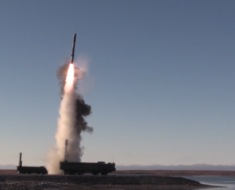
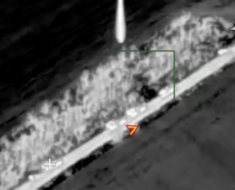
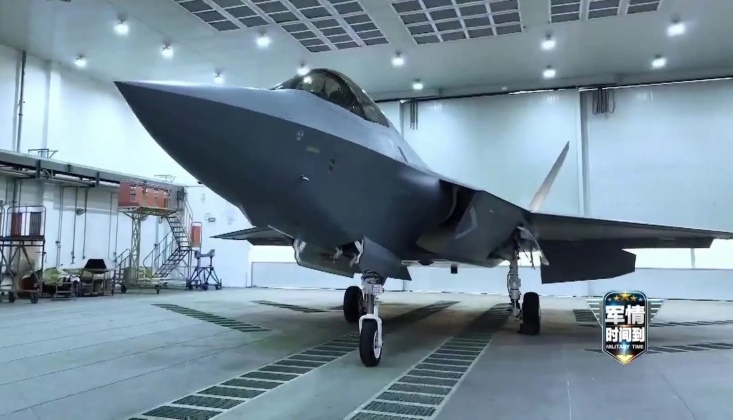
Chinese state media has published footage of the first export configured fifth generation fighter built in the country, a J-35AE aircraft, leading analysts to widely conclude that the first contract for the sale of the aircraft has likely been signed. The unveiling of a fully configured aircraft with export markings has been seen to indicate a shift towards more active efforts to market the fighter type abroad. The J-35 was first confirmed to have entered service in both the Chinese People’s Liberation Army Air Force and in the Navy in 2025, serving as a lighter counterpart to the J-20 air superiority fighter in the former service, and as a carrier-based fighter in the latter. The export variant notably has an engine design that more closely resembles that of the carrier-based variant, possibly due to a request from the client.
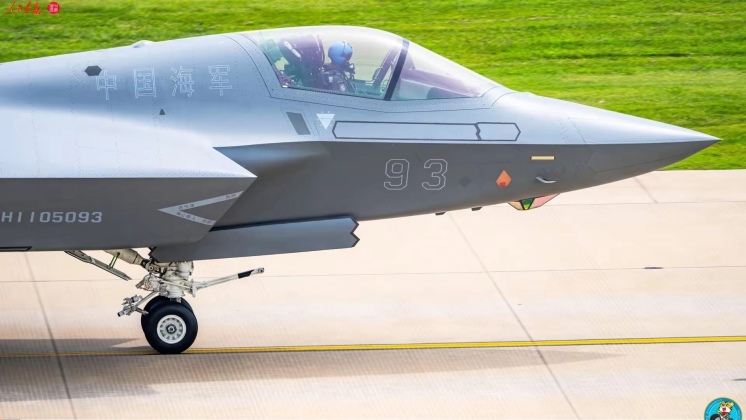
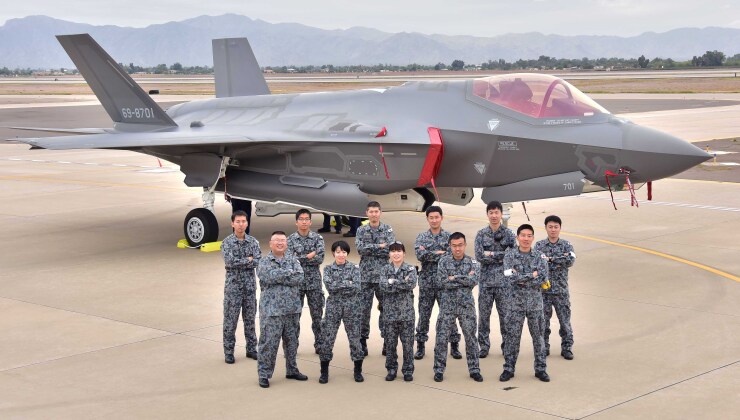
Currently only two fifth generation fighter types have ever been exported, including the U.S. F-35A which has been ordered to equip over 20 services worldwide, and the Russian Su-57 which saw the first two units delivered to Algeria in November 2025. In April 2025 Russian defence export conglomerate Rosoboronexport confirmed that multiple countries have now placed orders for Su-57s, with India, North Korea, Iran and Vietnam considered the most likely clients. In early February Russian Industry and Trade Minister Anton Alikhanov announced that contracts had been signed in the Middle East, with Iran considered the only likely client in the region. The J-35 is widely assessed to have a significantly superior air-to-air combat potential than either the F-35 or the Su-57, and with only limited competition within its generation, it may make significant gains on global markets.
In December 2025 an annual report by the U.S. Department of War to Congress on Chinese military capabilities observed that “interested clients” in the J-35 include Egypt, Saudi Arabia, and the United Arab Emirates. Nevertheless, a significant factor constraining the export potential of the J-35 is that China lacks an established position on global fighter markets, and has not constructed military bases or asserted political or economic leverage to allow it to press for the export of its aircraft as countries in the Western world, and to a lesser extent Russia, have done. Geopolitical factors mean many countries that would be potential clients for the J-35, such as Thailand, Indonesia, or Egypt, are likely to be dissuaded by considerable Western political pressure.
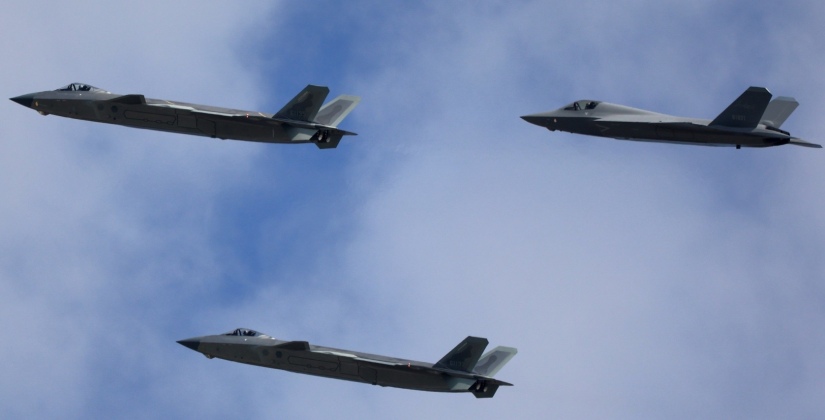
The J-35’s outstandingly advanced capabilities, and use of many technologies from the J-20 program, give it the potential to totally transform power balances in the air in any region to which it is exported.With China poised to be the world’s first country to field sixth generation fighters, and having exceeded experts’ projections with the successes of its J-20 stealth fighter program, the prestige enjoyed by its fighter aviation industry has risen very considerably over the past decade and is in many was unmatched. In May the sole foreign operator of the J-10C ‘4+ generation’ lightweight fighter, the Pakistan Air Force, was reported to have achieved major successes in shooting down multiple Indian Air Force fighters, including one to four newly procured French Rafales, which further raised the prestige of Chinese combat aviation products.
Leading potential clients for the J-35 may include Algeria, Pakistan and Indonesia, with clients among economically developed countries being few and far between for political reasons. The number of countries that are both able to afford the aircraft, and able to resist Western pressure, remain few. Although theU.S. Department of War predicted possible sales to the Arab world, political factors including sustained Western pressure, and the Arab Gulf states’ economic crisis and now greater reliance on Western military protection due to the outbreak of war with Iran, means the possibility of major breakthrough into Middle Eastern markets remains limited. The J-35 program is likely to illustrate that political factors, rather than advanced capabilities, are the primary determinant of fighter aircraft’s successes on global markets, with China’s limited exercise of leverage and application of pressure abroad meaning that although its fighter is in many respects the most capable on export markets, its market share will likely remain limited.